
The Ultimate Guide to Choosing the Right eSIM Card for Your Travel Needs
An eSIM card is a fully digital SIM embedded directly into a device, eliminating the need for a physical plastic card. It works by storing multiple carrier profiles on a single chip, which users can activate remotely by scanning a QR code. The primary benefit is the ability to switch between mobile networks without swapping physical SIMs, making it effortless to manage multiple numbers on one device. To use it, simply download your chosen carrier’s profile from your device’s settings menu.
What Makes Embedded SIM Technology Different
The first time I swapped phones on a train, I didn’t prise out a plastic card—I just scanned a QR code. That is what makes embedded SIM technology different: the eSIM card is soldered directly into your device, turning the physical slot into a tiny, rewritable chip. You no longer juggle multiple SIMs for work and travel; instead, you store several carrier profiles in one permanent module. “So, I never remove the card?” Not exactly—you erase or download a new digital profile in your settings. One moment you are on your home network; the next, you hop onto a local data plan abroad without visiting a shop. No tray, no popping out cards in the rain. The difference is that your connection lives in software, not plastic—flexible, remote, and always ready.
Core differences from physical SIM cards
The core difference is physical elimination versus digital integration. Unlike a plastic SIM that requires manual insertion and removal, an eSIM is a permanent chip soldered inside the device, rewriting connectivity as a software profile. This removes the need to fumble with trays or risk losing a tiny card, enabling instant remote activation. Crucially, it allows multiple carrier profiles to be stored simultaneously, though only one is active at a time, which eliminates physical SIM swapping entirely. Switching networks becomes a matter of setting a preference, not tracking down a new card.
What is the single most practical difference from a physical SIM card? An eSIM cannot be physically removed, which means you switch carriers or plans through a digital menu rather than by swapping a plastic card.
How reprogrammable chips replace removable plastic
Traditional SIMs had you pop out a tiny plastic card to switch carriers. An eSIM does away with that entirely. Instead of swapping physical plastic, a reprogrammable chip inside your device holds your subscriber data. You simply download a new profile to the chip, overwriting the old one. This removes the need for plastic SIMs entirely, turning your phone’s circuitry into the SIM itself. No more fiddling with a tray or losing a tiny card—just a quick software change to switch networks.
Why mobile operators are shifting to digital profiles
Mobile operators are shifting to digital profiles because they simplify logistics and cut costs. Instead of manufacturing, shipping, and stocking millions of plastic SIMs, they can now push a digital profile activation directly to your phone. This means you can start a new plan instantly without visiting a store or waiting for a physical card. It also lets them offer temporary data passes for travel or testing new services without needing a separate SIM. For you, this translates to faster service and the ability to switch profiles on the fly, all handled through their app.
How Embedded SIMs Work Behind the Scenes
An embedded SIM, or eSIM, is a tiny, soldered chip inside your device that replaces the physical card. Behind the scenes, it works by storing multiple carrier profiles in a secure, rewritable module. When you scan a QR code or download a plan, your phone contacts the carrier’s server, which pushes an encrypted profile directly onto that chip. Your device then activates it by swapping the stored credentials, essentially making the SIM a software-defined identity. A quick Q&A: How does switching carriers work? Your eSIM simply downloads a new profile and deactivates the old one—no physical swapping needed, just a few taps in settings.
Remote provisioning explained in simple terms
Remote provisioning replaces the physical swapping of SIM cards with a secure, over-the-air download. When you purchase a plan, the carrier sends a unique digital profile—called an eSIM profile—directly to the embedded chip in your device. This profile contains your subscriber identity and network credentials, encrypted to prevent interception. Your device’s operating system then stores this profile in a dedicated secure element, activating it instantly without any manual installation. The entire process happens on-demand, allowing you to switch profiles or carriers simply by selecting a different file from your device’s memory.
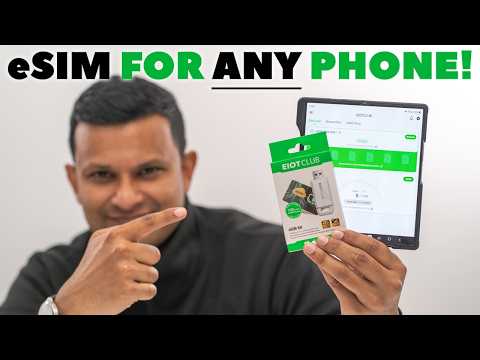
Remote provisioning is the secure, over-the-air delivery and installation of a digital carrier profile onto an embedded SIM, eliminating the need for a physical SIM card swap.
Switching carriers without swapping hardware
Switching carriers without swapping hardware is the core practical advantage of an eSIM. Instead of waiting for a physical SIM to arrive, users remotely download a new carrier’s profile to their device. This profile overwrites the old one through a secure, encrypted handshake between the phone and the carrier’s UK eSIM server. The entire process typically takes minutes, requiring only a data or Wi-Fi connection to fetch the remote provisioning profile. You can instantly move between networks for better coverage or pricing while keeping your existing device. Why can I switch carriers without touching my phone? Because the eSIM chip is soldered in, so the carrier change happens entirely in software—no hardware removal needed.
Storage of multiple profiles on a single chip
An eSIM’s real magic is that it can store multiple profiles on a single chip. You can have your work number, a personal line, and a travel plan all on that one tiny chip inside your phone. Switching between these profiles is as easy as toggling a setting—you pick which one is active for calls and data. Each profile is securely kept in its own little partition, so your work data never mixes with your vacation account. This means you can change carriers or add a local plan without ever touching a physical SIM card.
Key Benefits for Travelers and Frequent Movers

For travelers and frequent movers, the biggest win with an eSIM card is ditching physical SIMs and hunting for local shops. You can instantly switch to a local data plan from your phone’s settings, keeping your home number active for calls. This means seamless connectivity across borders without swapping tiny plastic cards or risking losing your primary SIM. It’s a breeze to pre-load eSIMs before a trip, so you have data the moment you land, avoiding pricey roaming. For frequent movers, managing multiple plans for different destinations is simple—store several eSIM profiles and activate them as needed, all without visiting a store.
Avoiding roaming fees with local network profiles
For travelers, local eSIM profiles eliminate roaming fees by connecting you to a regional carrier’s network at local rates. Instead of paying your home provider’s inflated daily fees, you purchase a data plan directly through a local eSIM, often costing a fraction of the price. This works seamlessly because your phone holds multiple profiles, allowing instant switching without physical SIM swaps. Q: How do I avoid roaming charges with eSIMs? A: By activating a prepaid local profile upon arrival, your device routes data through that network, bypassing international roaming tariffs entirely.
Instant activation upon arrival in a new country
The defining advantage of an eSIM is instant connectivity upon arrival, eliminating the physical SIM procurement process. As soon as a traveler lands, the eSIM profile, purchased and installed before departure, activates automatically upon detecting the local network. This removes the delay of searching for a store, verifying identification, or swapping nano-SIMs. Users step off the plane with data and voice services already functional, a critical benefit for immediate navigation, ride-hailing, or contact with local contacts.
- Network detection triggers activation within seconds of powering on the device in the new country.
- No physical exchange of SIM cards is required, preventing loss of the primary domestic line.
- Pre-paid eSIM profiles activate without requiring local currency or a retail point-of-sale.
Keeping a home number while adding a foreign line
For travellers and frequent movers, an eSIM enables dual SIM functionality without removing the physical home SIM. You keep your home number active for receiving essential calls, verification codes, and banking SMS, while simultaneously adding a foreign data eSIM for local internet access. This setup avoids roaming charges on the home line and prevents service interruptions, as your primary number remains reachable. No need to swap cards or inform contacts of a temporary number. The foreign eSIM handles connectivity, while the home line stays live for critical communications, maintaining seamless accessibility across both regions.
Device Compatibility and Setup Process
Before diving in, confirm your smartphone is eSIM-compatible; most modern flagships from Apple, Google, and Samsung support it, but budget models often lack the hardware. Is my carrier supported? Check their eSIM activation page immediately—not all providers offer it yet. Setup is fast: scan a QR code from your carrier or download their app to trigger automatic installation. For dual-SIM users, you can assign data or calls to the eSIM while keeping your physical SIM active. Unlike a physical card, switching profiles takes minutes: just scan a new QR code and select it as your active line.
Checking if your smartphone or tablet supports digital SIMs
To check if your smartphone or tablet supports digital SIMs, navigate to your device’s settings: on iPhones, go to **Cellular** and look for “Add eSIM”; on Android, open **Connections** or **Network & Internet** and search for “SIM manager” or “eSIM”. If missing, your device likely lacks hardware support. Alternatively, dial *#06#—if an EID number appears, your device is eSIM-ready. Verify eSIM support via your device’s IMEI using your carrier’s online compatibility tool for a definitive answer. Q: How can I quickly tell if my device supports eSIM? A: Check the Settings menu for an “eSIM” or “Digital SIM” option—its presence confirms compatibility.
Step-by-step installation via QR codes or apps
To activate an eSIM, simply scan a QR code provided by your carrier or open their dedicated app. After scanning, the device automatically detects and downloads the profile, prompting you to confirm installation. Within the cellular settings, you label the new line (e.g., “Travel” or “Work”) and set default data or voice preferences. This digital process eliminates physical SIM trays—instant activation occurs once you select the new plan under “Add Cellular Plan.” No manual entry is needed; the QR code or app handles every step, making the switch seamless and error-free.
Common pitfalls and how to troubleshoot activation
A frequent pitfall is installing an eSIM before confirming device carrier unlock on a locked phone; activation fails if the profile mismatches the network. Ensure stable Wi-Fi during installation, as interruptions corrupt the QR code or manual entry data. If activation stalls, restart the device to force a fresh profile handshake. Double-check that the APN settings auto-populated correctly, as incorrect values silently block data despite showing network bars. Clearing the device’s eSIM cache in network settings often resolves a stuck “activating” state without a provider ticket.
Comparing Costs: Physical vs. Digital Solutions
When comparing costs for eSIM versus physical SIM cards, the initial hardware expense favors digital. A physical SIM typically costs a small fee (often $1–$5) at purchase or replacement, while an eSIM has zero upfront material cost as it is embedded. However, the real financial divergence appears in usage scenarios. For travelers, a physical SIM may incur roaming charges or require buying multiple local SIMs, each with added cost and time. An eSIM allows instant, cost-effective local plan switching without shipping fees or wasted leftover credit.
The key insight is that digital eliminates cumulative “switching penalties” and physical logistics costs, making it cheaper for frequent network changes.
For long-term single-network use, the cost gap is negligible, but eSIM avoids replacement fees if you lose a phone or need a secondary line.
Upfront pricing for data-only plans

Upfront pricing for data-only plans eliminates hidden fees, showing the total cost for a set data allowance before purchase. Unlike physical SIMs with potential activation or shipping charges, eSIM data plans usually present a single, transparent payment. You pay immediately for the chosen megabytes or gigabytes, with no postpaid billing surprises. This model simplifies budgeting, as the price you see is the price you pay for the entire validity period. For travelers, upfront data-only eSIM plans allow quick comparison of per-gig costs across providers.
Hidden savings from avoiding physical logistics
Beyond the purchase price, digital eSIMs eliminate all physical logistics costs. You avoid shipping fees, packaging materials, and the environmental expense of plastic cards. There is no risk of lost or delayed delivery that requires emergency, costly replacements. This also removes the time overhead of visiting a store or waiting for mail, which carries an opportunity cost. These hidden expenses, though often unaccounted for, make total cost of ownership lower than physical SIMs for frequent travelers or remote setups.
Q: What is the biggest hidden savings from avoiding physical logistics with eSIM? A: The elimination of emergency shipping and replacement fees when a SIM is lost in transit or delayed, which can cost more than the plan itself.

Money-Saving tips for short-term and long-term use
For short-term savings, grab a regional eSIM data pack for your trip length instead of paying your home carrier’s daily roaming fee. Long-term, buy a yearly global plan or a local multi-month eSIM from a provider like Airalo or Holafly—this slashes per-gig costs compared to monthly top-ups. Always check for referral codes or first-purchase discounts before buying.
Q: What’s the top money-saving trick for both short and long trips?
A: Always calculate your total data need first. Buying a slightly larger data bundle upfront often costs less per GB than refilling small packs later.
Security and Privacy Considerations
An eSIM introduces distinct security and privacy considerations compared to a physical SIM. The embedded chip is soldered directly to the device’s motherboard, making it impossible to remove without destroying the phone, which deters physical SIM swapping attacks. However, this permanence means a compromised device cannot be secured by simply ejecting the card. Remote provisioning relies on secure over-the-air downloads using encrypted profiles, but this process creates a new attack surface; a malicious QR code could potentially install a fraudulent profile. Your network identity remains tied to the device’s hardware, meaning a factory reset might not fully erase all profile remnants if the eSIM memory is not cleared. Users must manage profile storage limits carefully, as an unsecured device with multiple downloaded profiles increases exposure to tracking or unauthorized network access.
How remote locking protects against theft
Remote locking for eSIM cards protects against theft by allowing a user to instantly deactivate the embedded profile via a carrier’s app or web portal if the device is lost or stolen. This action severs the eSIM’s connection to the network, making it impossible for a thief to use the mobile plan for calls, texts, or data. Consequently, the device itself becomes less valuable for fraudulent use. The process typically involves flagging the eSIM profile as stolen, which forces it to permanently disconnect. To restore service, a new eSIM must be issued only to the verified owner. The following sequence is standard:
- User reports loss or theft to the carrier or platform.
- Carrier remotely deactivates the specific eSIM profile.
- Network access is immediately blocked on the stolen device.
- User receives a replacement eSIM for a different device after identity verification.
Data encryption standards used in profile storage
eSIM profile storage relies on AES-256 encryption to protect sensitive operator credentials and authentication keys at rest within the secure element. This standard ensures that stored profile data, including the Integrated Circuit Card Identifier (ICCID) and cryptographic keys, remains unreadable without the correct decryption key. During profile download and installation, data-in-transit is secured using TLS 1.2 or higher, with the profile package itself encrypted using a unique session key derived from the eSIM’s permanent key. This layered encryption prevents unauthorized extraction or cloning of the digital profile, directly safeguarding the user’s identity and network access even if the device is compromised.
Risks of cloning or unauthorized access
The shift to eSIMs introduces distinct risks of cloning or unauthorized access. Unlike a physical SIM, your eSIM profile is a digital file that can be intercepted if your device’s secure element is compromised via malware or phishing. Attackers could copy your profile to another device, hijacking your identity for fraud. Even a stolen device is more dangerous with an eSIM, as the profile remains active unless remotely wiped.
- A malicious app could request access to the eSIM’s management interface, silently downloading your profile.
- QR code activation links, if intercepted or spoofed, can install a fraudulent profile that spies on your traffic.
- Weak cloud backup credentials for your eSIM data expose you to account takeovers.
Future Trends in Connectivity
Future connectivity is heading toward seamless global roaming, and your eSIM card is the key. It will automatically switch between local networks as you travel, without hunting for physical SIMs. A practical shift: eSIMs will prioritize the fastest, cheapest local tower in real-time, adapting as you move between countries. Q: Will future eSIMs work everywhere? A: They’re evolving to latch onto any compatible network globally, so constant dead zones should shrink. This means your phone stays online in remote spots via satellite backup, and managing multiple data plans for different regions becomes effortless through a single profile.
Integration into laptops, smartwatches, and cars
For users, the integration into laptops, smartwatches, and cars eliminates the need for physical SIM slots. A laptop gains instant cellular data access for remote work, while a smartwatch operates independently from a paired phone. In cars, an eSIM enables built-in Wi-Fi, real-time navigation updates, and emergency services without a tethered device. This unified connectivity means one profile activates across all gadgets. Can an eSIM in my car share the same plan as my laptop? Yes, operators now offer multi-device plans that let a single subscription serve your vehicle, watch, and computer seamlessly.
Role in global IoT expansion
eSIM technology directly enables global IoT expansion by allowing devices to be manufactured with a single, reprogrammable profile. This eliminates the need for physical SIM swaps, meaning sensors, trackers, and industrial machines can be deployed anywhere and instantly connect to local networks via remote provisioning. A logistics container, for example, can auto-switch carriers as it crosses borders without human intervention. This flexibility reduces the operational friction of managing thousands of geographically scattered, low-power endpoints. Consequently, businesses can scale connected operations across continents without logistical delays or hardware redesigns for each region.
Potential for fully virtual network operators
With an eSIM, you can tap into fully virtual network operators that exist only in software. These providers run entirely on big carriers’ infrastructure but offer unique, app-based control. You could switch your data plan in seconds, pick a temporary number for a trip, or activate a cheap, long-term subscription without ever touching a physical SIM. The zero physical footprint of eSIMs makes this possible, letting you roam between virtual operators instantly.
Fully virtual operators use eSIMs to offer flexible, app-only services with instant plan switching and no physical cards.